
Creativity to Change the World
Our Justice Lead, Emma Temple, shares a reflection on how creative hobbies could be a vital part of change-making…
Every August bank holiday weekend, I pack up the car and head to a field in Northamptonshire for Greenbelt Festival. It’s a place that’s very special to me, where I reconnect with old friends, with myself, and with what matters most to me. It encourages me in all the ways I try to be an activist, and artist; a person of faith, and an all-round-better-human throughout the year.
This year though, it also affirmed something unexpected – the many, many hours I spend clicking together my knitting needles, researching patterns, picking up dropped stitches, and, supporting my local indie yarn shop.
We all know rest is important. “You can’t pour from an empty cup” and all that. I always saw my craft-y hobbies as a lovely distraction to refuel me for the “real” work of life – my job, volunteering, writing to my MP, etc. But what I heard at Greenbelt this year was that our hobbies, and particularly our creative hobbies, are a vital part of the real work towards being the change we’d like to see in the world.
Here are a few of the lessons I learned…
Community is vital
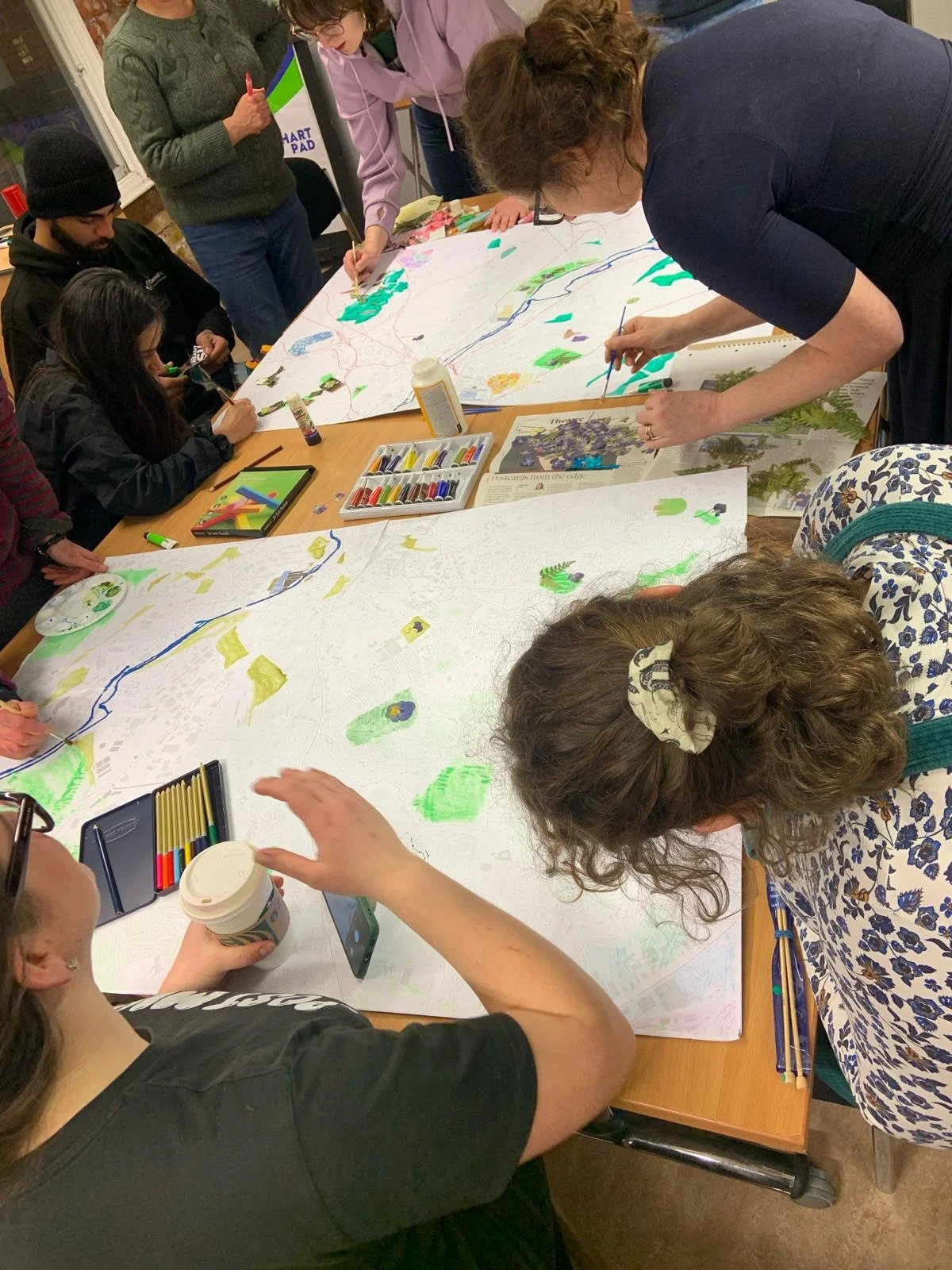
Gabor Maté says, “Safety is not the absence of threat, it’s the presence of connection.” If we want to create safer communities, and reduce our anxiety in the face of the many dangers in our society, then we need to seek connection with others, and particularly those who are different from ourselves. Creative hobbies bring people together – sharing knitting pattern recommendations in the yarn shop, learning new stitch techniques, and even finding an online global community in knitting forums and podcasts, all fosters a sense of unity around a common love of crafting. And this can be true of any creative outlet like joining your local gardening group, sketch club, DnD campaign, or creative writing circle. You may not make lots of new friends for life, but small encounters with people outside your usual social circle can only be a positive thing in our increasingly individualised society.
Your rested self is your best self
One reminder that stuck with me from the weekend, from eco-anxiety expert Jo Musker-Sherwood, was that “when you’re tired you’re easier to manipulate”. Scary or what! As a perpetually busy person, I feel like I spend a lot of my days rushing from one task to the next in a sleepy daze. Taking the time to slow down and do something “unproductive” is a counter-cultural act in itself. And it re-centres us on what’s important so that we can resist the constant bombardment of messages from our capitalist society to buy buy buy, as well as from the 24-hour news feed that everything in the world is terrible. Having a go-to way of switching off from these unhelpful messages gives us the space to assess what’s really true, and where our actions will be most impactful. It frees us to respond to the world from a place of abundance and generosity, not scarcity and panic. And that is the kind of reaction we need to build a truly better future.
Imagining a better world
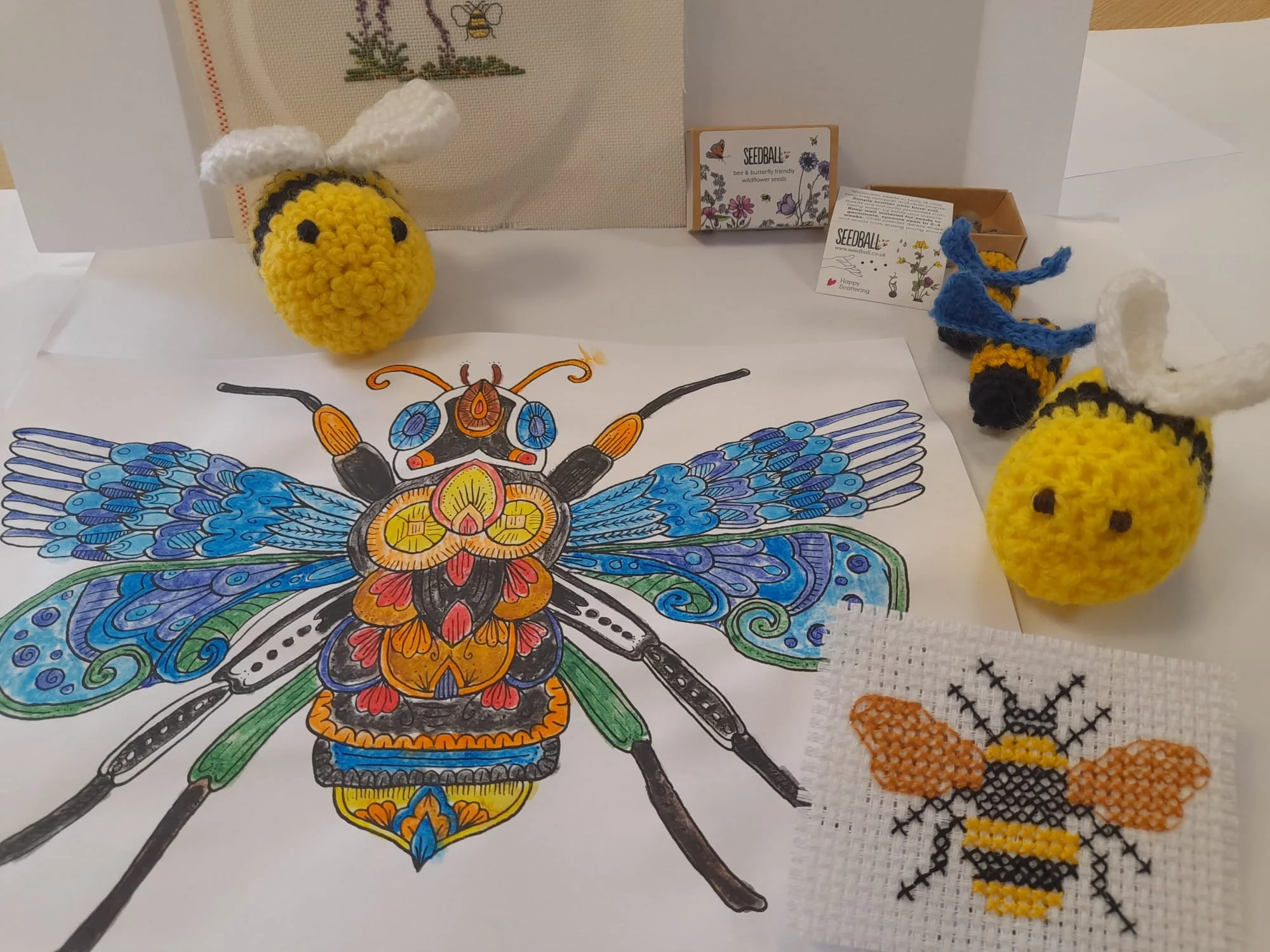
When we create something, we start with nothing. Looking at a fresh skein of yarn, it could become anything I want to set my needles to – a pair of socks, a beautiful hat, a cosy jumper. Sometimes I have odds and ends and scraps left over, and it takes some resourceful thinking to imagine how I can use it well. The big challenges we’re facing right now – the climate crisis, polarisation, inequality, will take all of our best creative thinking to overcome, so getting into the habit of looking sideways at the problems in front of us, and dreaming up what we can do with the simple supplies in front of us, is excellent practice for dreaming up a better tomorrow.
If you want to get stuck into a new creative hobby, or join a community of changemakers, the Leeds Craftivists meet on the first Monday evening of every month at the Imagine Climate Hub. You are so welcome to join us in stitching for change!